Written by Diane Corriette. I was a life coach and motivational speaker long before I became a developer, and I spent years building websites and doing online marketing for other professionals. I trained as a full stack developer in my 50s. Now I build my own content tools and use the methods on this page on my own sites. This page is itself a cluster page, the same structure I use everywhere else.
Written Content Is a Trust Signal
A client is buying a result from someone they cannot test beforehand. Written content lets them test you. They can read how you explain a problem, whether you have seen it before and whether your approach makes sense to them, all before they spend anything or speak to you.
It also keeps working. An article can be found in search, shared, saved and quoted long after you wrote it, and it does not need you to be available or on camera.
Before I went into software development (which I am fairly new at only 2 years in) I put up WordPress websites and my only website was a constant source of leads thanks to the content I wrote. Of course back then blogging was the main source and video hadn't taken over yet, but 90% of my clients who emailed me or called me got in touch after reading something I had written.
Case Studies: Proof Without Hype
A case study is the strongest kind of non-commodity content, because it shows your method working for a real person. The simplest structure has three parts: where the client started, what changed and where they ended up.
Keep three things in mind. Get written permission and agree what can be shared. Change or remove anything that could identify someone who has not agreed. Describe the result honestly, including anything that did not go to plan.
Some professions have extra rules. Accountants, vets and health professionals carry confidentiality duties, and some regulators set limits on how results and testimonials can be described. Check what applies to you before you publish.
Case studies, white papers, a manifesto, they all work, as does anything you have written from your point of view.
Where EEAT Fits In
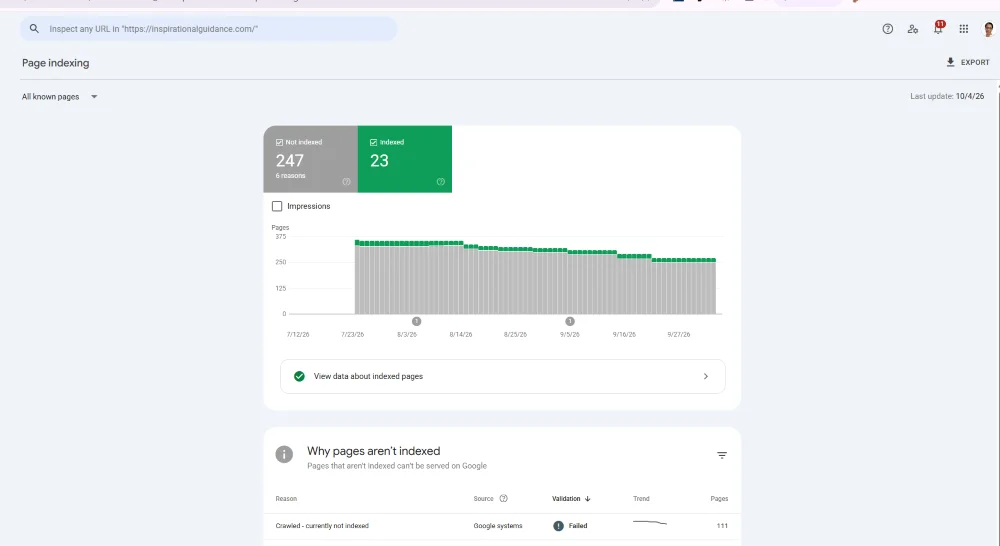
Experience, Expertise, Authoritativeness and Trustworthiness (EEAT) is a framework used by Google to evaluate the quality of your content. It doesn't guarantee ranking but it does determine whether your content is deindexed by Google, and therefore not shown in the search results. So, it's important.
Non-commodity content can help demonstrate these qualities through genuine experience, relevant expertise, reliable evidence and clear authorship.
However, not every useful article needs a personal story. A technical tutorial can be distinctive because it includes a working example, original testing, accurate instructions and explanations of difficult decisions. A research-based article can provide value through careful analysis and credible sources.
I became passionate about all things related to EEAT and non-commodity content after having a ton of my articles deindexed after the May 2026 update from Google. It literally pulled me offline. It's my own fault, I slapped a load of generic AI generated content without any consideration for whether it was truly useful. My only concern was that it saved me time but now, I am dedicating time on reversing this trend, so ultimately I ended up worse off.
What Makes Content Non-Commodity?
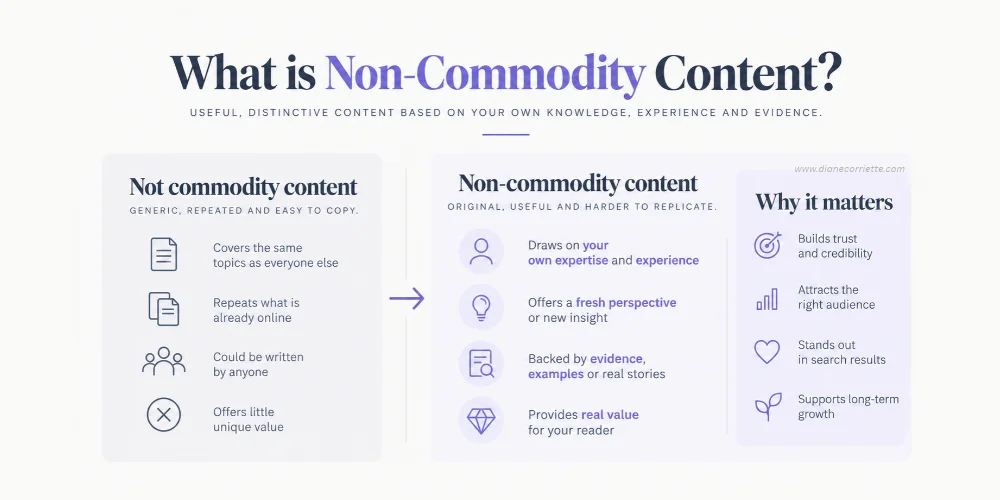
Here's a quick test that will answer that question for you. If another person in your profession can publish your article under their own name without changing a word, then you have commodity content that readers can get anywhere, and AI can produce in seconds.
As an example, I used to write about building self-confidence. A generic article on the topic would focus on setting boundaries, dealing with self-doubt, speaking up and learning to trust your decisions - I have written those in my time, believe me.
A non-commodity version might explain:
-
Why speaking up can be difficult in particular situations with a specific experience that illustrates the problem.
-
What I personally tried, what happened, what I learned from it and even what didn't work.
-
How to distinguish between situations where speaking up is useful and situations where a different response is appropriate with practical examples of what to say.
The content comes from what you have actually done. Ask yourself:
- What did I do, and what happened?
- What worked, what didn't, and why?
- What do I believe about this that others in my field might disagree with?
- What have I tested myself?
The answers look different in every situation and every profession. AI can help you arrange and communicate your answers, but it cannot supply experience you do not have. Anything it invents (and it is good at making up stuff) such as a client story, a statistic or a quote, damages the trust you are trying to build.
Tools That Do the Thinking With You
Three tools I have built cover the stages of writing content that builds authority. They are made for people who know their subject and want help turning it into something readers can use.
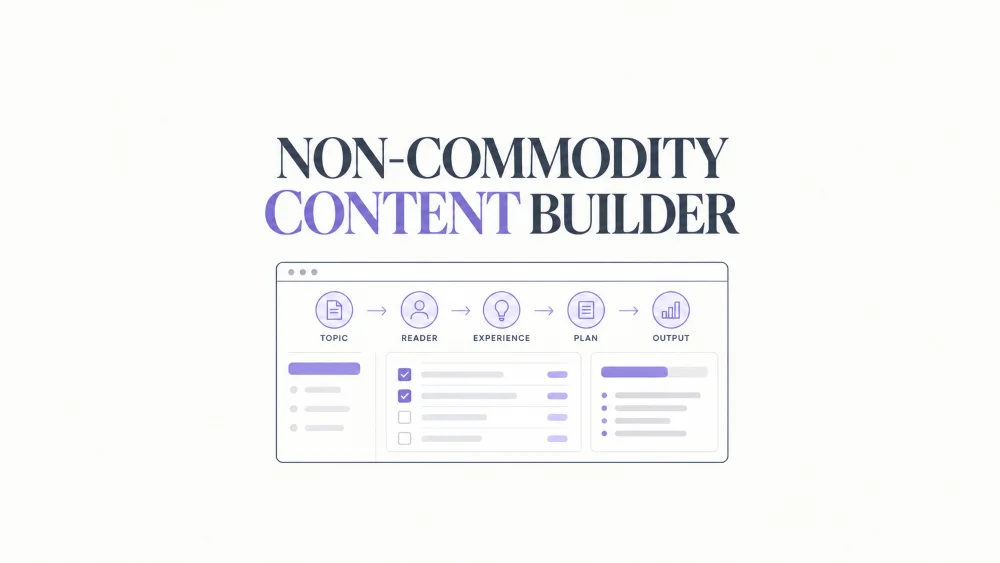
- Non-Commodity Content Builder: a free tool that takes you through six stages to plan an article around your own experience, evidence and point of view, then gives you four files to guide your writing. Your answers stay in your browser.
- Content Planning Studio: a desktop app that plans 30 or 90 days of content for one website at a time, in your own voice, using writing you have already done.
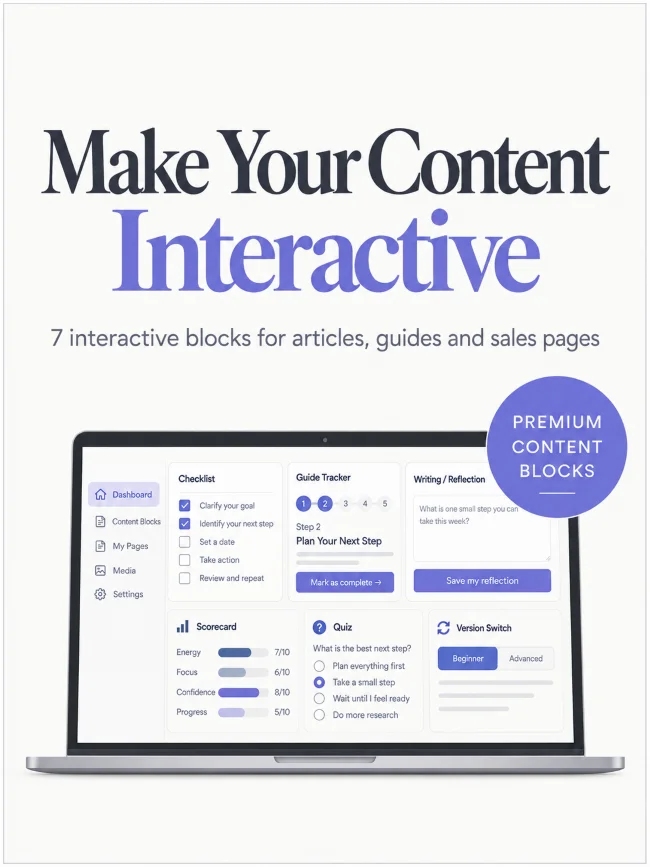
- Interactive Content Blocks: adds checklists, quizzes, scorecards and writing boxes to your articles so readers can do something on the page.
Use AI But Don't Lose Your Voice
I use AI regularly and have been since October 2024, back then I would copy and paste whatever it gave me straight onto my site, which meant I ended up with a ton of "AI Slop" that at the time I thought was brilliant writing but now I see it as generic advice.
Now, I don't publish anything it writes without reading through it first because I see AI as a collaborator, not a replacement for what I know, and my advice to you is that you do the same.
What works for me is giving it real material first. Thanks to software I have developed I have one place that I add my notes, stories, experiences, examples and opinions. I also have a long list of things I don't want it to do. Then I get it to provide me with a variation of titles, it will use a story I have saved and if it does add anything I get it to explain, not invent. After that I read the result for tone, truth and clarity, and rewrite anything that doesn't sound like me, although it's getting better at getting it right.